
ACM Chip Swap Forensics
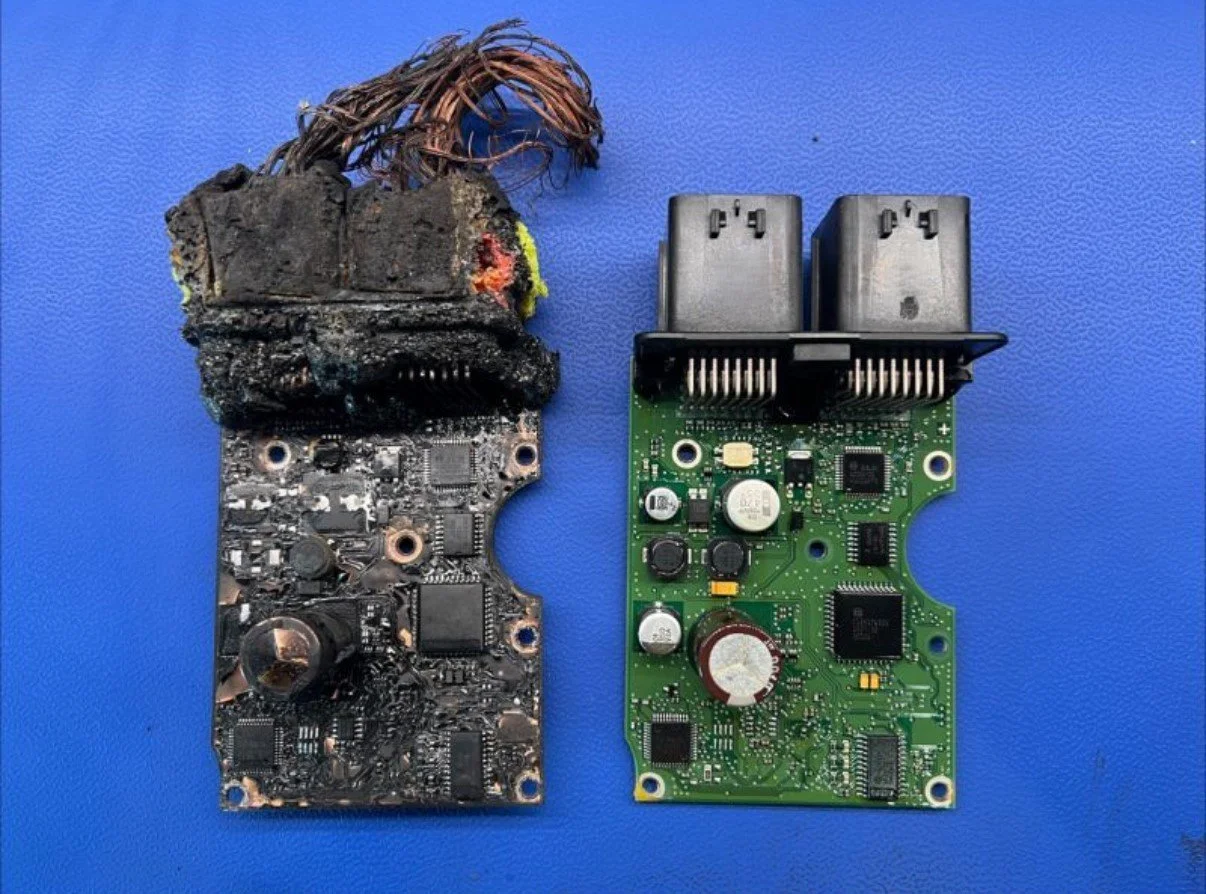
Forensic recovery of crash data from physically damaged airbag control modules.

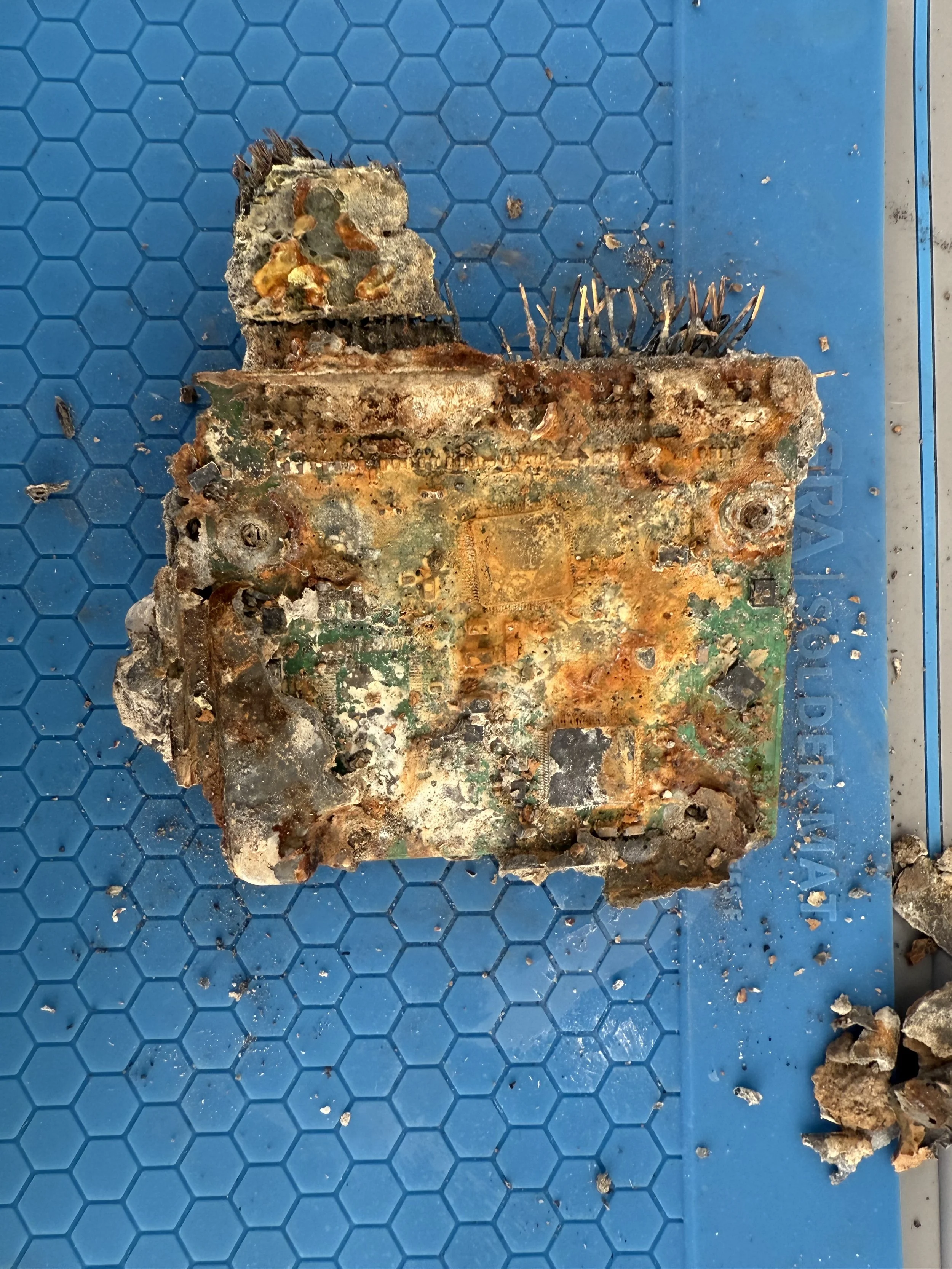
What We Recover.
The crash damaged the module. It doesn’t always damage the data.
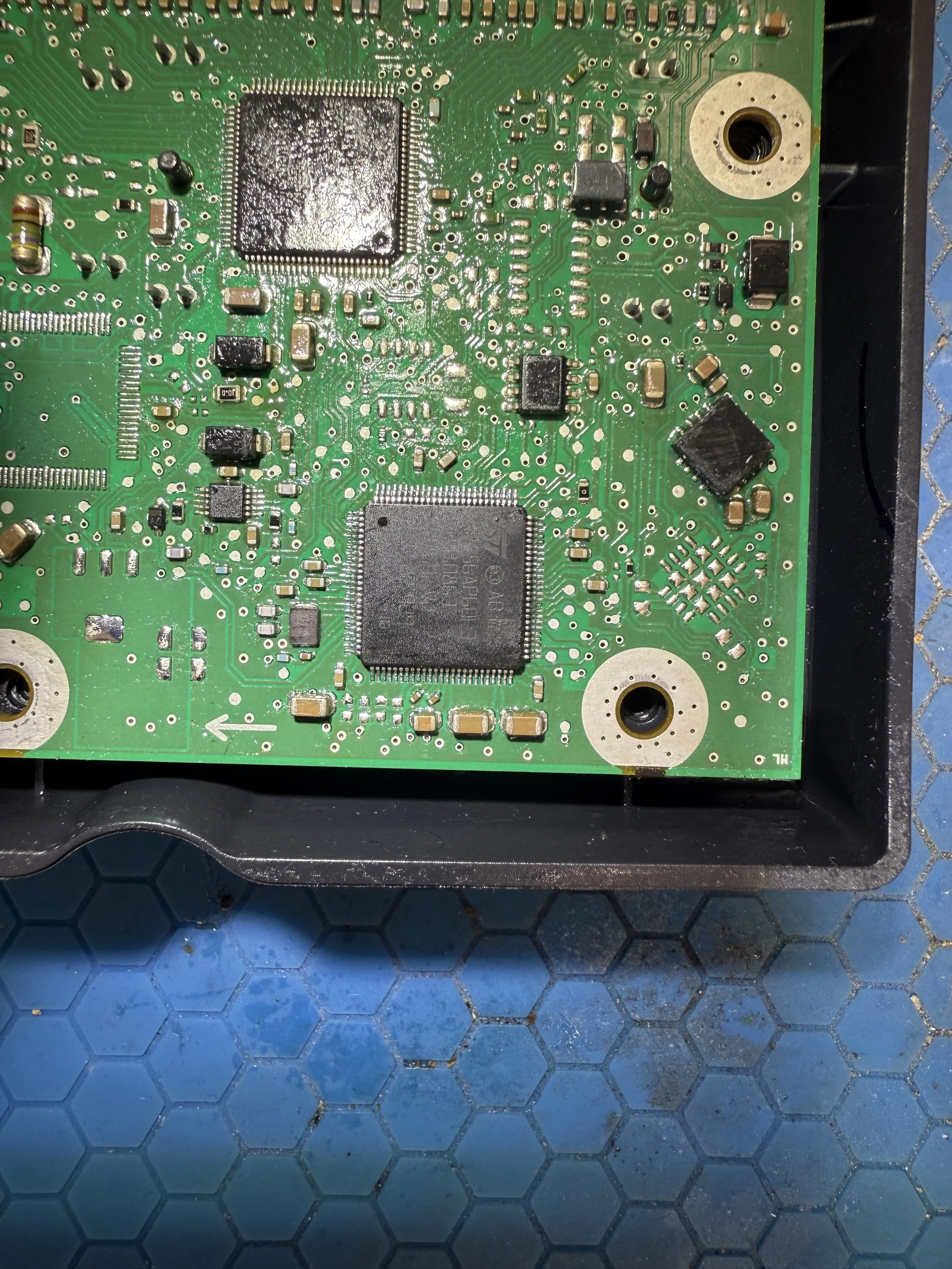
When an airbag control module is physically destroyed - crushed in the collision, scorched in a post-crash fire, shorted by electrical fault, submerged in water - the assumption is that the crash data is gone with it. In most cases that assumption can be wrong. The memory chip that holds the crash event data can survive conditions that destroy everything around it.
For a reconstruction expert, that data establishes what the vehicle was doing before the crash - speed, braking, occupant status - with a precision physical evidence can’t always match.
For an attorney on either side of the case, it either corroborates the reconstruction or contradicts it. Either outcome changes the case.
Fenix recovers it from the chip directly, using a proof-of-concept methodology published in peer-reviewed research since 2017, forensically preserved and court-ready.
Flat Rate Service. $1,500 per module
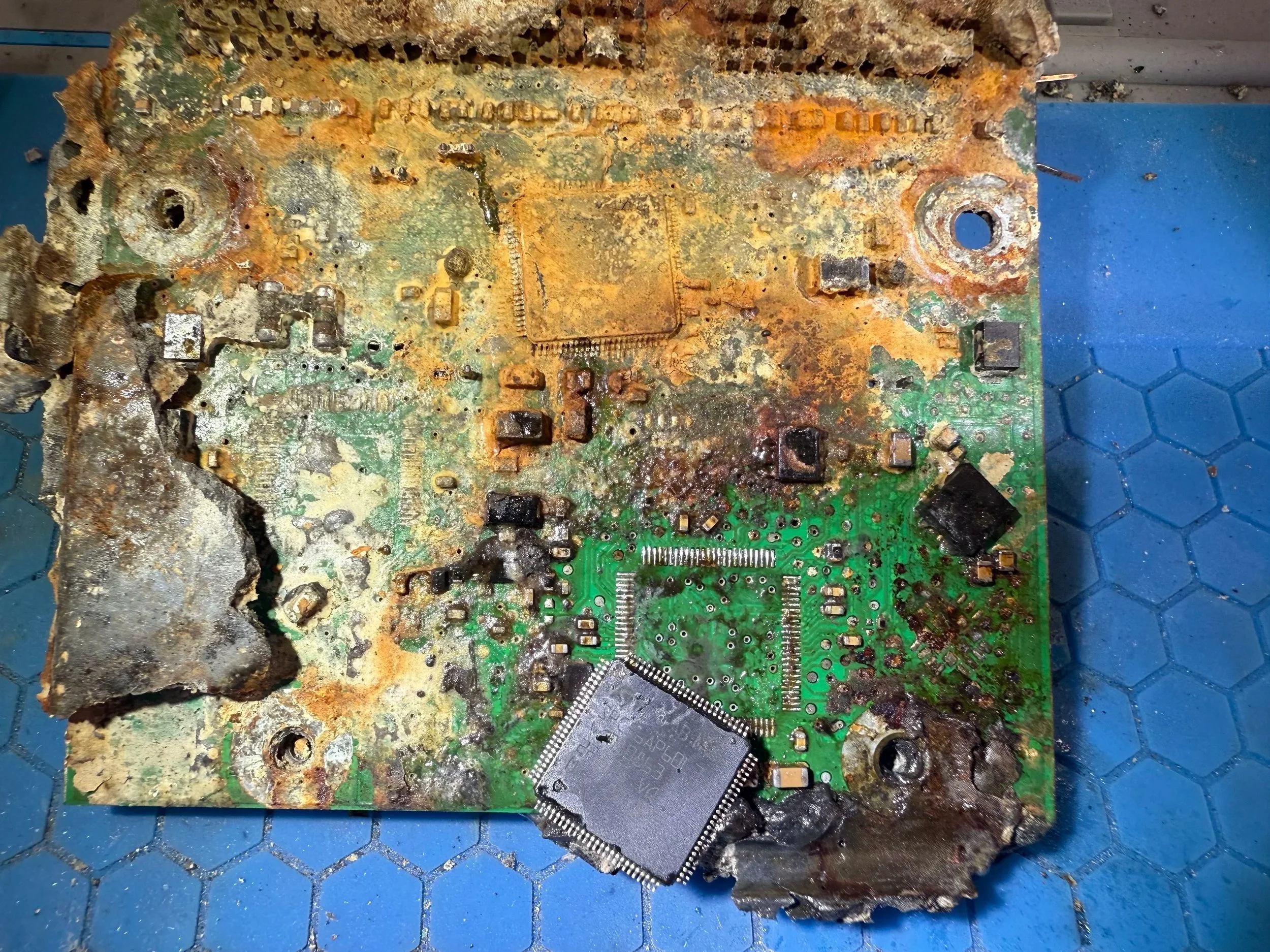
How We Verify.
The methodology is published. The findings are defensible.
Fenix's founder co-authored the reference paper on chip swap forensics in 2017. That paper established the methodology - but published research alone doesn't make a recovery defensible.
Memory architecture varies between modules. Identical-looking units from the same vehicle line can store crash data on different chips. Swap the wrong one without knowing and you've compromised the evidence and the case.
Before we touch your subject module, we conduct a proof-of-concept on two matching exemplars. The chip from the first exemplar is swapped onto the second - confirming that all crash data has been correctly identified and completely transferred before your module is ever opened. When opposing counsel questions the methodology at deposition, we don't point to a paper. We point to a documented physical trial performed on identical hardware.
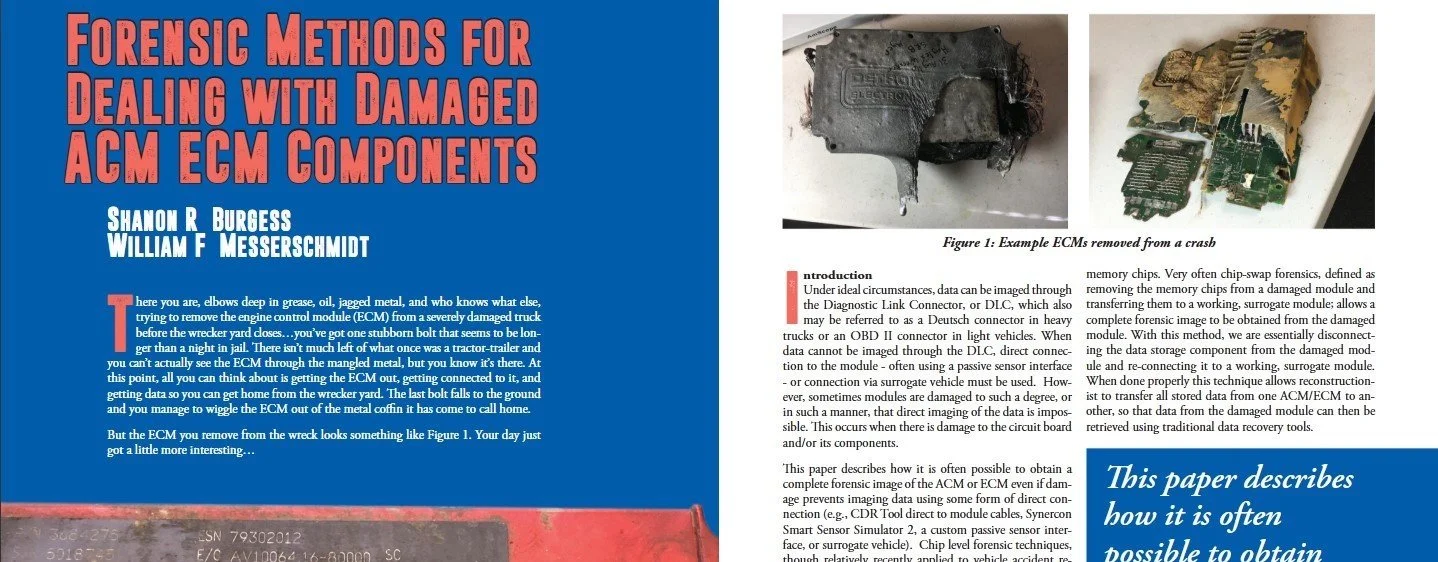
Forensic Methods for Dealing with Damaged ACM/ECM Components — Burgess & Messerschmidt. Published in Collision: The International Compendium for Crash Research, Vol. 12, Issue 2, 2017.
When To Engage Us.
This service is for airbag control modules that have sustained physical damage - from the crash itself, post-crash fire, submersion, electrical fault during extraction, or mishandling during evidence preservation.
If the module communicates and the data is accessible through standard CDR workflow, this isn't the service you need. If the module is physically destroyed and CDR can't establish communication, it is.
One thing to know before you submit: chip swap recovery extracts all data the module wrote before the damage occurred. If the event happened faster than the module's write cycle the data may have never been fully recorded, if at all. Our proof-of-concept methodology confirms which situation applies. A successful read with no data present is a finding, not a failure.
Frequently Asked Questions
-
Chip swap recovery is specifically for modules with physical damage - crash impact, fire, water submersion, electrical fault, or mishandling during evidence preservation. If the module is intact and simply unsupported by commercial CDR tools, this method will not recover data. If you're unsure whether your module qualifies, reach out.
-
A successful download with no data present is a forensic finding, not a failed recovery. Our proof of concept methodology guarantees the forensic procedure - not the presence of data. What we cannot guarantee is that the module recorded data before it was damaged - that depends entirely on the timing of the damage relative to the module's write cycle, which is determined by the crash, not by us.
-
Two exemplars are required to validate the recovery before your subject module is touched. The chip from the first exemplar is swapped onto the second to confirm that all crash data has been correctly identified and completely transferred. This step proves the swap captures everything - nothing is left behind on the donor. By the time we open your subject module, the procedure has already been performed and validated on identical hardware.
-
Yes in most cases. Fenix sources the two exemplar modules matching your subject module's hardware revision as part of the flat rate. The exception is rare or newer modules that are difficult to source or carry significant cost. In those cases we'll disclose the additional cost upfront before any work begins.
-
Once the exemplar modules arrive standard turnaround is 10 business days. Rush service is available when your case has a deadline - contact us when you submit and we'll confirm availability and timing.
-
Yes. The examiner who performed the work is the same one who testifies to it. Expert testimony is available for deposition and trial and is billed separately from the flat rate. If you know at the time of submission that testimony will be required, let us know so we can plan accordingly.
Ready to submit a case?
Flat rates. Forensic-grade output. Expert availability on every engagement - from discovery through trial testimony.