
Vehicle System Forensics
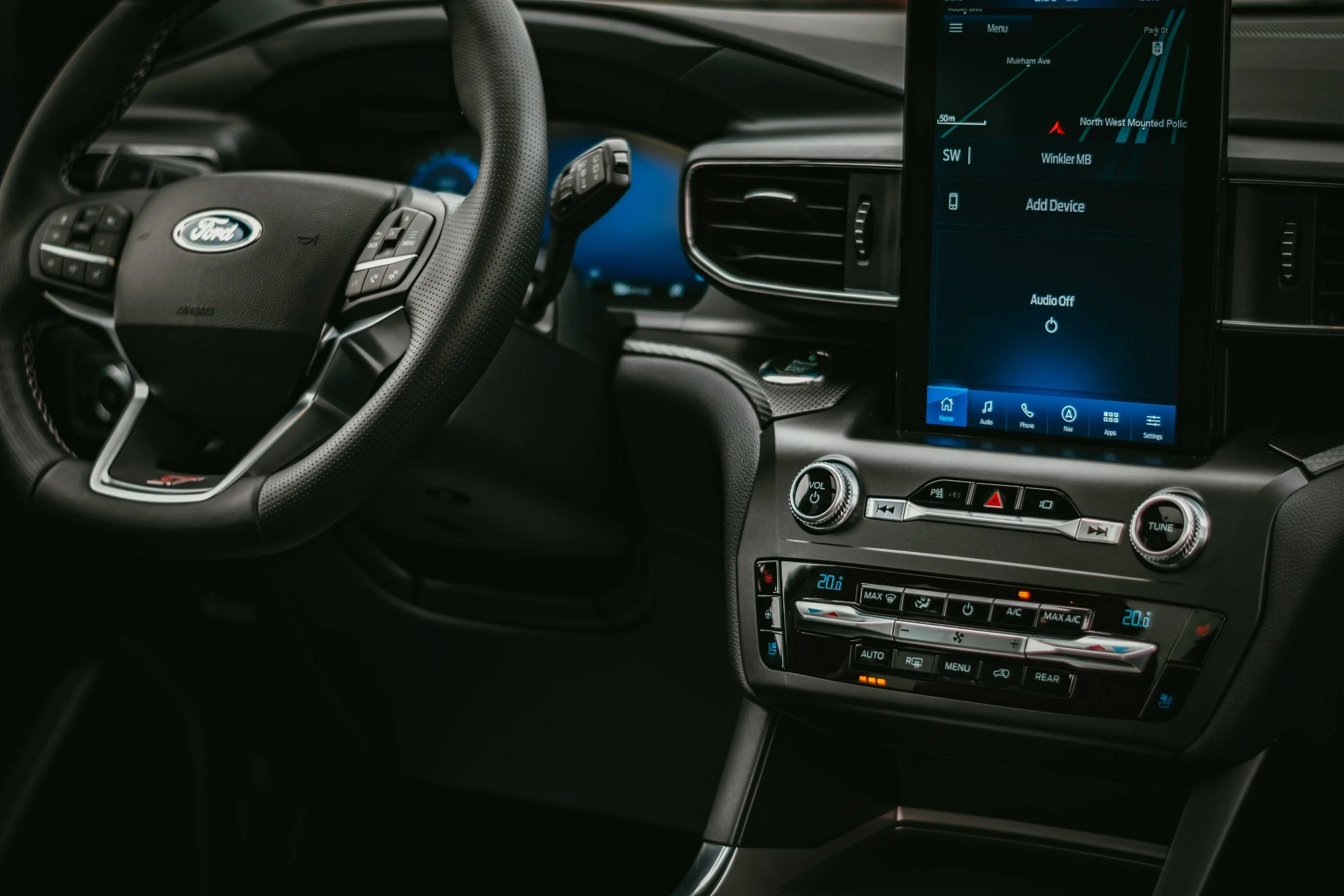
Forensic acquisition of vehicle infotainment, telematics, and other modules - the data your case needs, extracted from the hardware that records it.

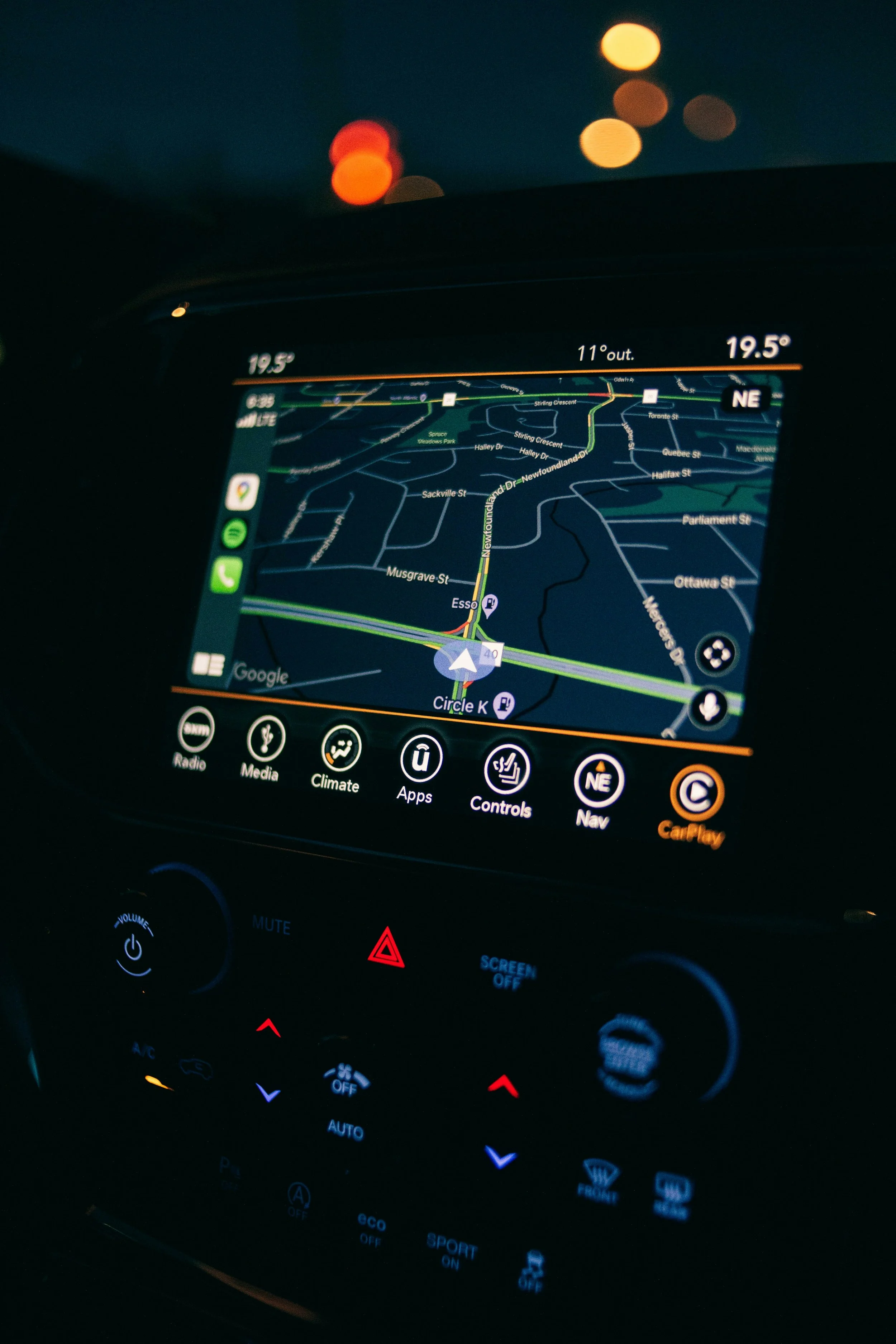
What We Acquire
The vehicle may have recorded the incident. How much of it gets recovered depends on who's doing the examination.
Modern vehicle infotainment and telematics modules store data that commercial forensic tools don't always support. When a tool doesn't support a module, most examiners stop there. The absence of tool support doesn't mean the absence of data. Vehicle systems require an understanding of how they're built, where data is stored, and how to acquire it when there's no push-button solution. Without that understanding, components get missed, examiners look in the wrong places, and data that may exist on the vehicle never makes it into the report.
For a plaintiff attorney building a case around vehicle behavior and location, an incomplete examination isn't a neutral outcome - it's evidence that was never recovered.
For a defense attorney whose client's case depends on what the vehicle actually recorded, an opposing examiner who stopped at tool support has left data on the table that Fenix can find.
Fenix acquires data from infotainment and telematics modules that commercial tools don't support - using in-house methodology developed from active casework and published in peer-reviewed research.
Flat Rate Service. $1,200 - $1,800
How We Acquire.
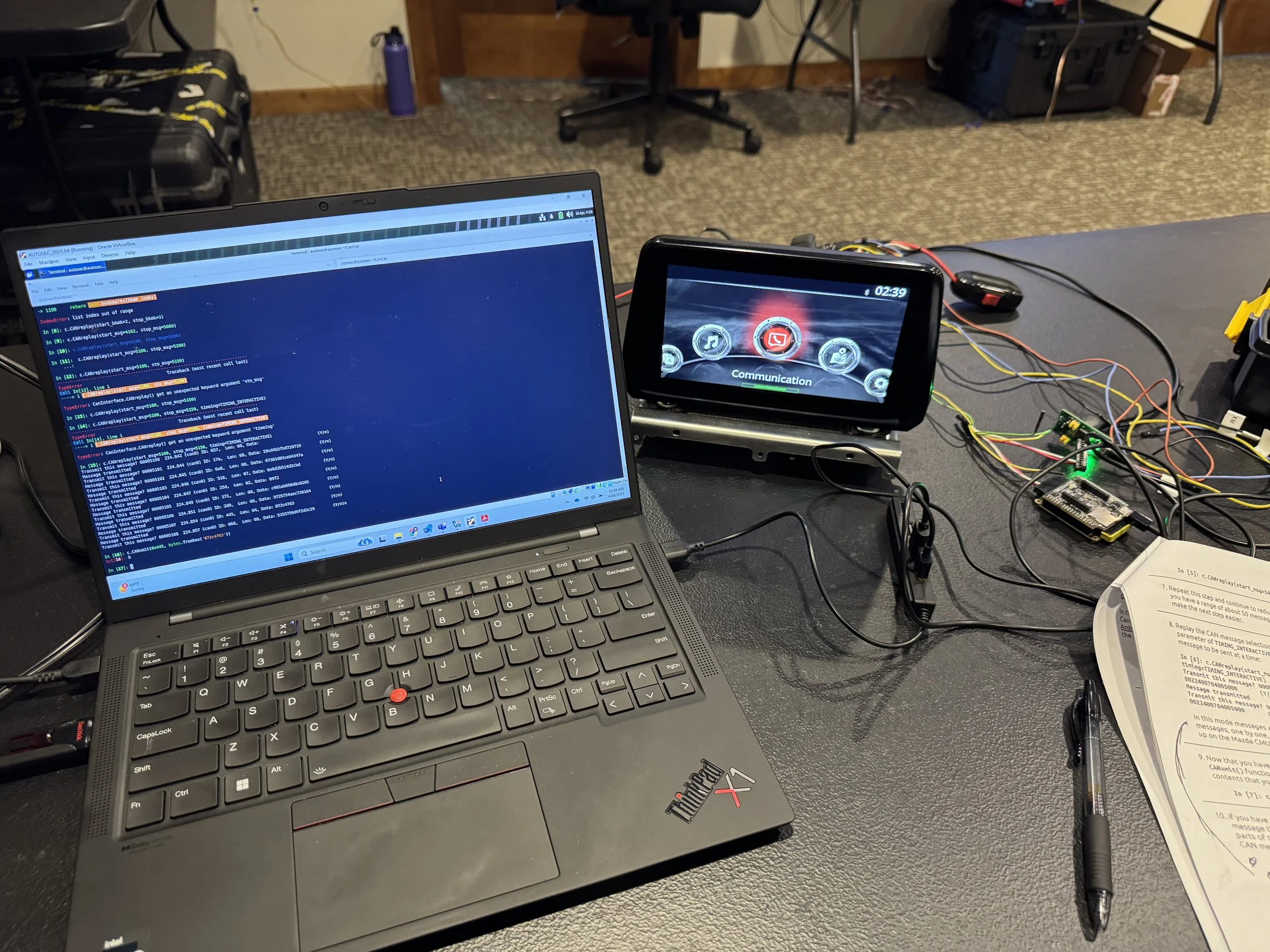
Every module is a different problem. We've developed the tools and methodologies to solve it.
Commercial forensic software covers the most common module configurations. What it doesn't cover are the newer platforms, proprietary architectures, and OEM variants that show up in modern connected vehicles and increasingly, in the vehicles at the center of serious litigation and investigation. When the commercial tools stop, most firms stop with them. Fenix doesn't.
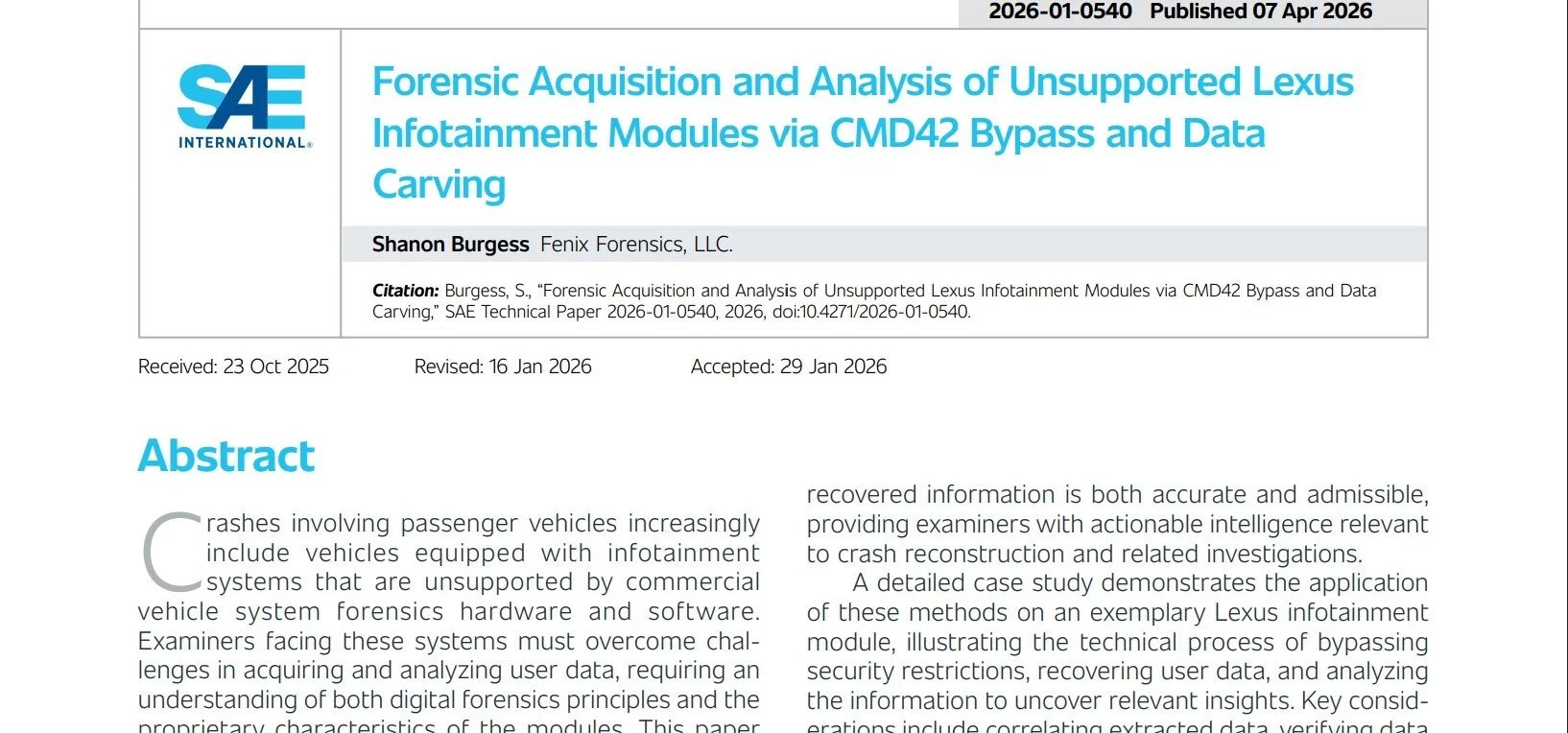
In April 2026, Fenix presented peer-reviewed research at the SAE World Congress demonstrating exactly that. Confronted with Lexus infotainment modules that no commercial tool could acquire, Fenix used Rusolut VDR as the foundation to develop a methodology to bypass CMD42 security locks and recover user data through data carving techniques then published it. That research is the product of the same casework this service is built on, and it represents how Fenix approaches every unsupported module: develop the methodology, validate it, document it, and deliver the data.
Forensic Acquisition and Analysis of Unsupported Lexus Infotainment Modules via CMD42 Bypass and Data Carving — Burgess. SAE Technical Paper 2026-01-0540. WCX SAE World Congress Experience, Detroit, April 2026.
When should you use us.
If your case needs to know where a vehicle went, what it recorded, or what devices connected to it - Fenix is the answer. Vehicle location history, paired device records, call logs, app data, and event records are all potentially recoverable from the physical module. It doesn't matter whether the vehicle was in a crash, stolen, abandoned, or simply driven - if the module holds the data, Fenix can acquire it.
One thing to know before you submit: data availability depends on the vehicle make, model, year, and module configuration. Not every system retains the same dataset, and some older or more basic configurations hold less than others. We'll confirm what's recoverable on intake. If the module falls outside both Rusolut VDR and our in-house tooling - which is rare - we'll tell you before any work begins.
Frequently Asked Questions
-
Not necessarily but it will depend on the specific module. Post-crash, fire-exposed, and water-damaged modules are all candidates for acquisition. Physical condition affects the module's ability to power on but not necessarily the integrity of stored data. Submit the module and we'll assess it on arrival.
-
A successful download with no data present is a forensic finding, not a failed recovery. Our proof of concept methodology guarantees the forensic procedure - not the presence of data. What we cannot guarantee is that the module recorded data before it was damaged - that depends entirely on the timing of the damage relative to the module's write cycle, which is determined by the crash, not by us.
-
Any investigation where vehicle location, behavior, or device activity is relevant. That includes crash reconstruction, vehicle theft, insurance fraud, missing persons, domestic matters, criminal defense, and civil litigation. The data the module holds is the same regardless of the nature of the case - GPS history, paired devices, call logs, app data, and vehicle event records. What changes is how your case uses it.
-
The rate reflects the complexity of the acquisition. Modules with known configurations that Fenix has previously acquired sit at the lower end of the range. Modules requiring new tooling development - newer platforms, proprietary architectures, or OEM variants not previously documented - sit at the higher end. The applicable rate is confirmed before work begins.
-
No. This service covers physical module acquisition only. If your case requires data from connected vehicle telematics portals, OEM cloud records, or remote data sources, that is a separate service. Contact us to discuss scope.
-
The module can be removed and mailed directly to Fenix. The vehicle does not need to be present. If you need guidance on proper removal and packaging to preserve evidence integrity, we'll provide instructions when you submit.
Ready to submit a case?
Flat rates. Forensic-grade output. Expert availability on every engagement - from discovery through trial testimony.